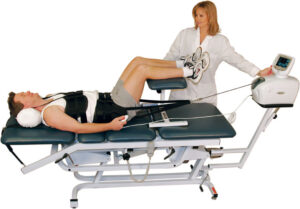
Traction is a therapeutic modality commonly used by physical therapists to relieve pressure in the spine or other joints by gently applying a pulling force that separates two adjacent bones. This separation increases the joint space and stretches the surrounding muscles, ligaments, and tendons, helping to restore movement, reduce pain, and improve overall function. Traction can be applied in several ways, including manually by a therapist, using mechanical devices, or through positioning techniques that use gravity or specialized tables.
When applied to the spine—known as spinal traction—this technique can be especially effective in relieving compression on the spinal cord, nerve roots, and associated blood vessels. By elongating the spine, traction allows facet joints to glide more freely, enhances circulation, and reduces inflammation by decreasing the concentration of irritating chemicals in damaged tissues. This leads to a reduction in pain and stiffness, and helps improve mobility and healing.
Traction therapy is often used to treat conditions such as:
- Spinal disc bulges or herniations
- Spinal misalignment
- Spinal stenosis
- Degenerative disc disease
- Pinched nerves
As a non-invasive treatment, traction is a gentle yet powerful tool in many rehabilitation programs. It can offer relief and restore movement for individuals dealing with chronic back or neck pain, or recovering from acute spinal injuries.